Suspension Glass Insulators vs Toughened Glass Insulators: Key Differences

Jun. 26, 2026
Selecting the right insulator is essential for ensuring the safety, reliability, and long-term performance of power transmission and distribution systems. A common question among utility companies, EPC contractors, and electrical engineers is: What Is the Difference Between Suspension and Toughened Glass Insulators?
Although these terms are often mentioned together, they describe different aspects of an insulator. Suspension refers to the installation and application method, while toughened glass refers to the material used to manufacture the insulator. Understanding this distinction helps buyers choose the most suitable solution for overhead transmission projects.
A Suspension Insulator is designed to support and electrically isolate high-voltage conductors while suspending them from transmission towers.
Instead of using a single solid insulator, suspension systems consist of multiple insulator discs connected in a string. The number of discs depends on the transmission voltage and environmental conditions.
Suspension insulators are commonly used in:
High-voltage transmission lines
Extra-high-voltage (EHV) systems
Ultra-high-voltage (UHV) projects
Long-span transmission lines
River crossing and mountain transmission projects
Their modular design allows engineers to increase insulation performance by adding additional discs.
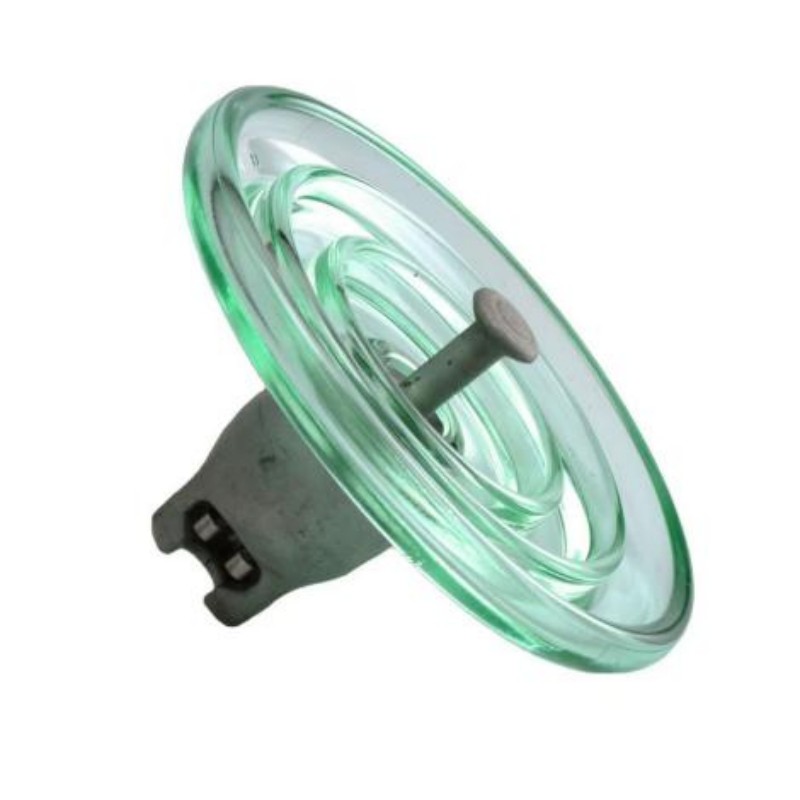
U16oBL/170 Standard Suspension Glass Insulator
A Toughened Glass Insulator is manufactured using specially tempered glass with high mechanical strength and excellent electrical insulation performance.
The tempering process creates compressive stress on the glass surface, significantly improving its resistance to mechanical impact and thermal shock.
Key characteristics include:
High dielectric strength
Excellent mechanical performance
Superior weather resistance
Long service life
Easy visual inspection
Stable electrical characteristics
When damaged, toughened glass breaks into small fragments, making faults easy to identify during routine inspections.
The most important distinction is that the two terms describe different concepts.
Suspension Insulator refers to how the insulator is used within the transmission line.
Toughened Glass Insulator refers to the material used to manufacture the insulator.
Many modern suspension insulators are actually manufactured from toughened glass, meaning a single product can be both a suspension insulator and a toughened glass insulator.
Transmission insulators are commonly manufactured from three materials.
Advantages include:
High transparency for easy inspection
Excellent aging resistance
High mechanical strength
Stable insulation performance
Low maintenance requirements
Porcelain insulators have been widely used for decades because of their durability and strong insulation properties.
They perform well in various climates but are generally heavier than glass alternatives.
Composite insulators use fiberglass cores with silicone rubber housings.
Advantages include:
Lightweight construction
Excellent pollution resistance
Hydrophobic surface
Easy transportation
High seismic performance
Suspension insulators provide several operational benefits.
Additional insulator discs can be added to accommodate higher voltage levels.
Suitable for long-span transmission lines carrying heavy conductor loads.
Individual damaged discs can often be replaced without changing the entire string.
Properly designed suspension strings provide decades of dependable service.
Toughened glass offers several unique benefits.
Damaged glass becomes immediately visible, simplifying inspection and maintenance.
Glass performs well under UV exposure, rain, snow, and temperature fluctuations.
The tempering process significantly increases impact resistance.
Glass maintains consistent insulation performance throughout its service life.
Both suspension and toughened glass insulators are widely used in:
High-voltage overhead power transmission systems.
Medium-voltage electrical distribution infrastructure.
Wind farms, solar substations, and grid connection facilities.
Power supply systems for electric railways.
Large industrial facilities and utility substations.
When selecting transmission insulators, buyers should evaluate:
Choose the appropriate insulation level for system voltage.
Ensure the insulator meets tensile and mechanical strength requirements.
Consider pollution level, humidity, salt contamination, and altitude.
Glass, porcelain, or composite materials should be selected according to project requirements.
Verify compliance with IEC, ANSI, or other applicable utility standards.
Long-term reliability reduces maintenance costs and improves grid performance.
The global transmission industry continues to invest in advanced insulation technologies.
Current trends include:
Ultra-high-voltage transmission projects
Smart grid modernization
Renewable energy integration
High-strength toughened glass technology
Composite insulator adoption
Improved anti-pollution performance
Digital transmission line monitoring
These developments support safer, more reliable, and more efficient electrical networks.
Weixiao Electric manufactures high-quality transmission and distribution insulators for utility companies, EPC contractors, and electrical infrastructure projects worldwide.
Key advantages include:
Advanced manufacturing technology
High-strength toughened glass production
Strict quality inspection
Compliance with international standards
Excellent mechanical and electrical performance
OEM and customized solutions
Professional engineering support
Extensive global export experience
Weixiao Electric supplies reliable insulator solutions that help customers build safe, efficient, and long-lasting power transmission systems.
No. Suspension insulators can be manufactured from toughened glass, porcelain, or composite polymer materials.
They provide excellent mechanical strength, stable electrical performance, and visible failure characteristics that simplify maintenance.
Both toughened glass and porcelain offer excellent long-term durability when properly selected for the operating environment.
Yes. They are widely used in high-voltage, extra-high-voltage, and ultra-high-voltage transmission projects around the world.
Yes. Customized specifications, mechanical ratings, and project-specific insulator solutions are available for global transmission and distribution applications.
Looking for the right transmission insulator for your power infrastructure project?
Our engineering team can help you evaluate voltage requirements, environmental conditions, and mechanical performance to recommend the most suitable insulator solution.
Welcome to contact us for technical consultation, project evaluation, customized insulator solutions, samples, and competitive quotations.
Email: sales@weixiaoinsulator.com
Weixiao Electric specializes in suspension insulators, toughened glass insulators, porcelain insulators, composite insulators, transmission line hardware, and complete insulation solutions for power transmission and distribution projects worldwide.
 Aug. 25, 2026
We always want to make sure that our customers are getting the best deal, so let us know what you're interested in and we'll get back with a quote!