Glass Insulators vs Porcelain Insulators: Which Is Better?

Jul. 20, 2026
Glass and porcelain are the two most widely used traditional materials for high-voltage line insulators. Both provide reliable electrical insulation, but they have different advantages in terms of electrical performance, maintenance, mechanical strength, and environmental adaptability.
Choosing between glass insulators and porcelain insulators depends on the operating voltage, installation environment, pollution level, mechanical stress, and long-term maintenance requirements of the power system.
Toughened glass insulators provide excellent dielectric performance and strong resistance to electrical stress. Their high insulation strength makes them suitable for high-voltage transmission applications where reliable electrical performance is essential.
The smooth glass surface also reduces contamination adhesion, helping maintain insulation performance in outdoor environments.
Porcelain insulators offer stable insulation performance and have been widely used in power transmission systems for decades.
However, porcelain surfaces are more likely to accumulate pollution, dust, and moisture. In areas with heavy contamination, additional surface treatments or regular cleaning may be required to reduce leakage current.
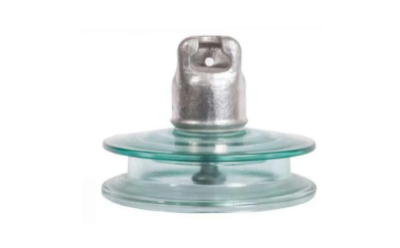
Double-umbrella Type Glass Insulators
One of the biggest advantages of glass insulators is their transparency.
During routine line inspections, technicians can easily identify:
When a glass insulator fails, the tempered glass disc usually breaks visibly, making fault identification and replacement faster.
Porcelain insulators are not transparent, so internal damage can be difficult to detect during visual inspection.
Utilities often need additional testing equipment to identify hidden defects, which may increase inspection time and maintenance costs.
Tempered glass insulators have excellent tensile strength and perform well under normal mechanical loads.
They are widely used for suspension strings and transmission lines where stable electrical and mechanical performance are required.
Porcelain has strong compressive strength and performs well under continuous mechanical stress.
For areas with heavy ice loads, strong wind conditions, or high mechanical pressure, porcelain may still be considered depending on the project requirements.
Glass insulators offer excellent resistance to:
Their strong thermal shock resistance allows them to operate reliably under sudden temperature fluctuations.
Porcelain insulators also provide long-term outdoor performance but may be more sensitive to thermal shock and environmental changes.
In heavily polluted or coastal environments, porcelain insulators may require more frequent maintenance to maintain insulation reliability.
Many buyers initially compare insulators mainly by purchase price. However, the total cost of ownership is often more important for long-term power projects.
Although glass insulators may have different initial costs, their visual fault detection capability can significantly reduce inspection difficulty and maintenance time.
For large transmission networks, reducing fault diagnosis time directly improves grid reliability and lowers operational expenses.
A high-voltage transmission project located in a coastal region experienced frequent maintenance challenges due to salt contamination and difficult fault detection.
After switching to toughened glass insulators, maintenance teams were able to identify damaged units more quickly during routine inspections.
The improved visibility and stable outdoor performance helped reduce inspection workload and improve transmission reliability.
For coastal areas and regions with frequent pollution, glass insulators are often preferred because of their strong contamination resistance and easier fault identification.
For high-voltage transmission projects requiring efficient maintenance and quick inspection, glass insulators provide advantages through their transparent structure and visible failure mode.
For areas with extreme mechanical loads, such as heavy ice or high wind environments, porcelain insulators may be selected based on specific engineering requirements.
The best choice depends on the complete operating environment, not only the material itself.
Weixiao Electric specializes in providing high-quality glass insulators for power transmission and distribution applications.
With professional manufacturing capabilities and strict quality control, Weixiao Electric supports customers in selecting suitable insulation solutions based on voltage levels, environmental conditions, and project requirements.
Weixiao Electric glass insulator solutions are widely used in:
The company focuses on delivering reliable insulation products with stable performance, long service life, and application flexibility.
Power industry users commonly value glass insulators because they provide:
Many utilities find that selecting suitable insulation materials at the project design stage helps reduce unexpected failures and improve long-term power system reliability.
Weixiao Electric provides professional glass insulator solutions for global power transmission projects.
Customers can benefit from:
Whether you are upgrading an existing transmission network or purchasing insulators for a new power project, Weixiao Electric can provide suitable solutions based on your voltage requirements and installation environment.
See our product page for full details.
Contact Weixiao Electric for professional glass insulator solutions.
Email: susan@weixiaoinsulator.com
Request a Quote today to discuss your project requirements and find the right insulation solution for your power system.
 Aug. 25, 2026
We always want to make sure that our customers are getting the best deal, so let us know what you're interested in and we'll get back with a quote!